Summary
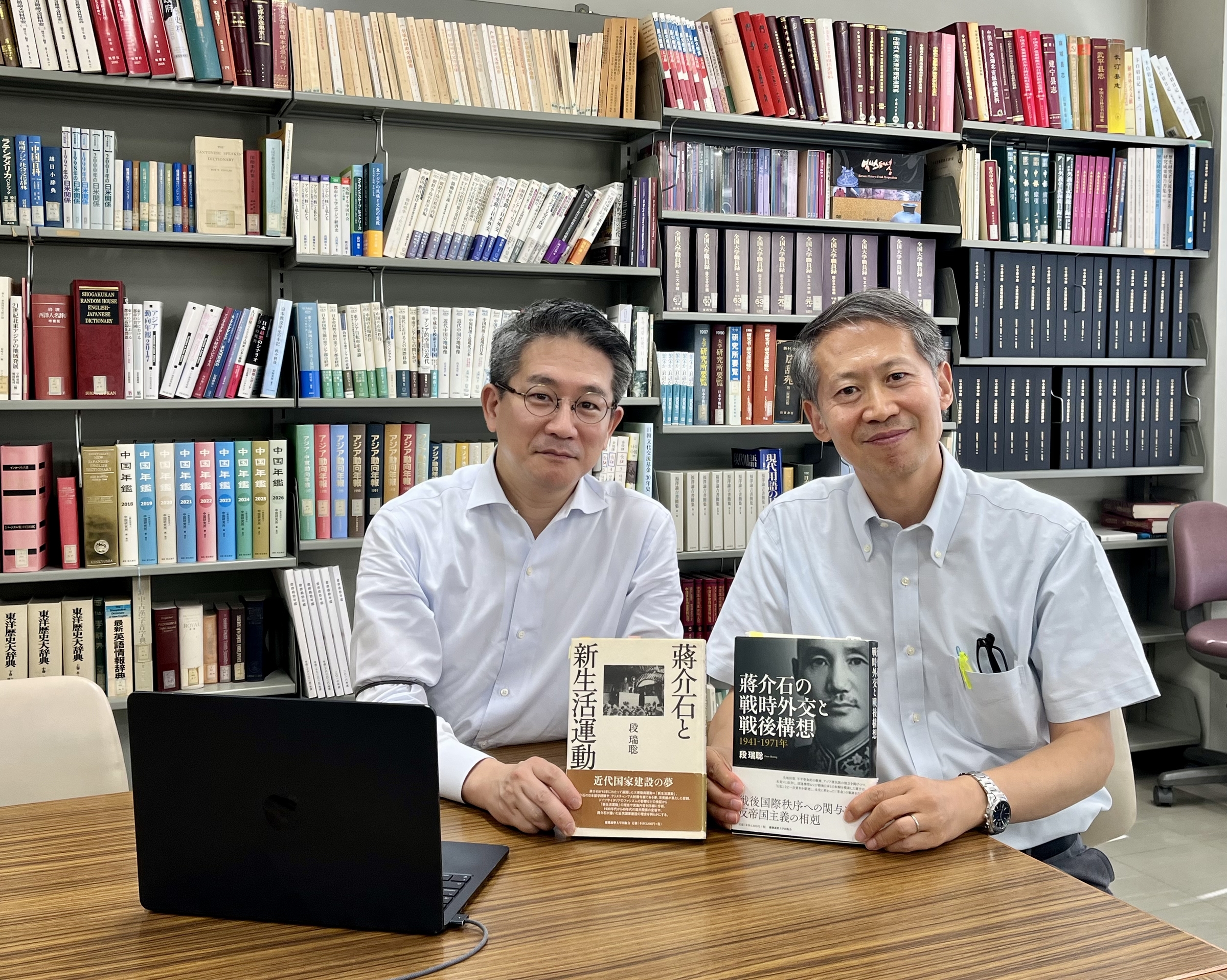
How should Chiang Kai-shek be described? A leader of resistance against Japan, an anti-communist leader, Japan’s “benefactor,” or Taiwan’s “authoritarian ruler”? Such labels have shifted markedly across time and place. In this episode, we welcome Professor Ruicong Duan of the Faculty of Business and Commerce at Keio University to discuss his books Chiang Kai-shek and the New Life Movement (Keio University Press, 2006) and Chiang Kai-shek’s Wartime Diplomacy and Postwar Vision, 1941–1971 (Keio University Press, 2021). We trace the origins of his research to a sense of déjà vu from his high-school years, consider the significance of the dates 1941 and 1971, revisit the question of continuity and rupture across 1949, and examine the unresolved issues of borders and territory. What can a renewed reading of Chiang Kai-shek contribute to our understanding of contemporary China? We explore these questions through concrete episodes.
A déjà vu of “Five Stresses and Four Beauties”: the starting point of Chiang Kai-shek studies
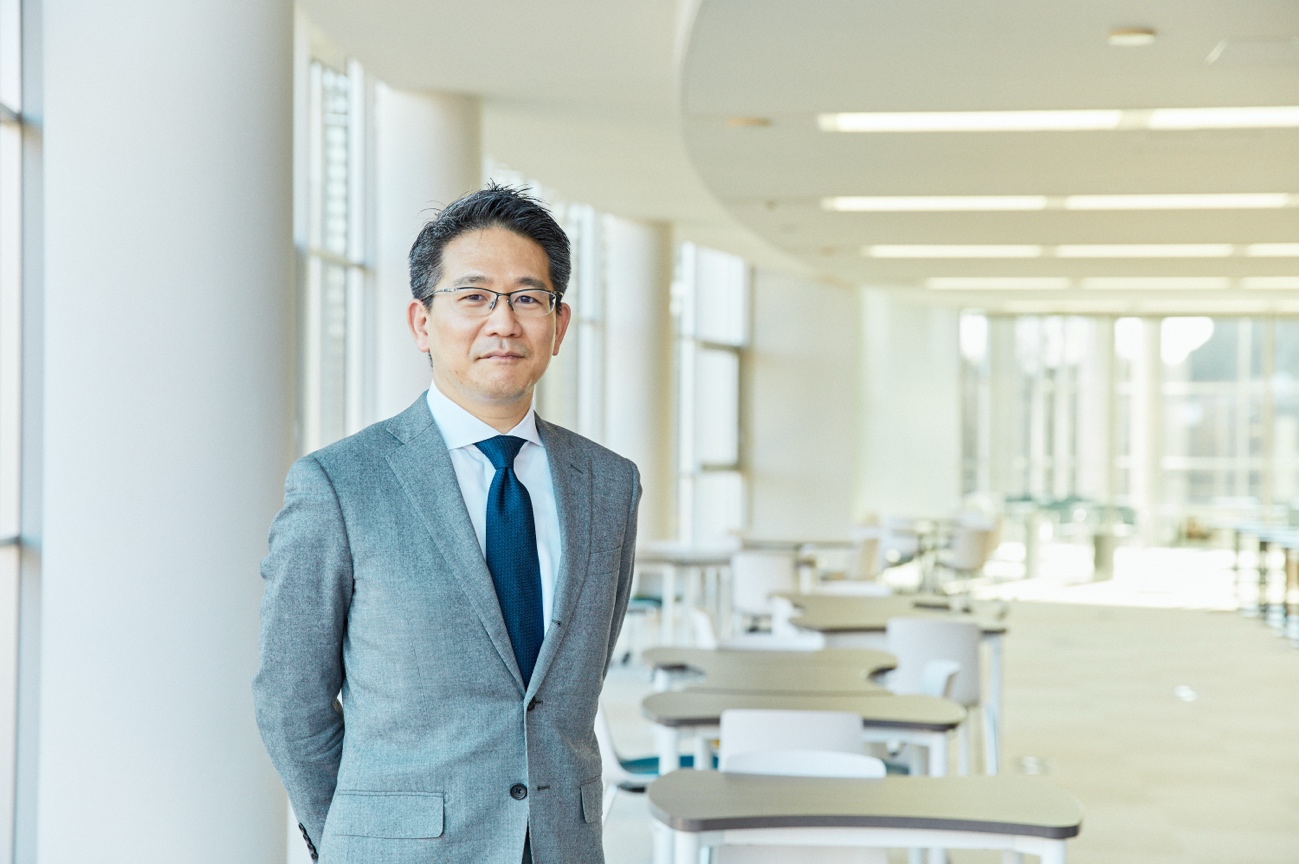
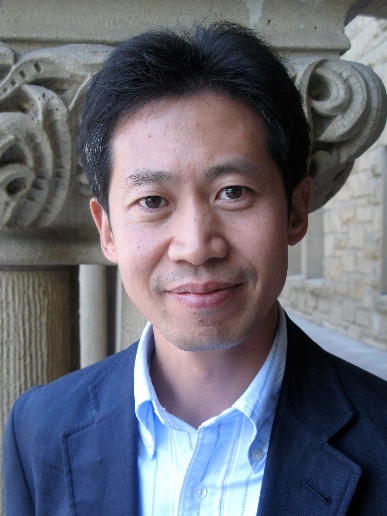
Professor Duan specializes in modern Chinese political history and has held visiting appointments at institutions including the Hoover Institution at Stanford University. His research focuses on the history of the Republic of China, with Chiang Kai-shek at its center. How does this research connect to an understanding of contemporary China? This question guided the conversation.
Its starting point was a sense of déjà vu. As a high-school student in China, Professor Duan experienced the “Five Stresses and Four Beauties(五讲四美)” campaign, a 1980s movement that called for respect for etiquette, hygiene, order, and morality, and for beauty in one’s mind, language, conduct, and environment. Later, while reading Chiang Kai-shek’s speeches on the New Life Movement in the Keio University library, he noticed a striking resemblance between the two. The eras and political systems differed, yet they shared a historical logic: the state presented an ideal image of the citizen and sought to transform people’s ways of life. Looking back through modern Chinese history from this perspective, he thought, might allow a deeper understanding of contemporary China. His first book emerged from this insight.
Transforming everyday life and creating citizens: Chiang Kai-shek and the New Life Movement
The New Life Movement was a mass movement launched by Chiang Kai-shek in Nanchang, Jiangxi Province, in 1934. Its aim was to create “new citizens fit for a modern nation-state” by transforming everyday life through discipline, etiquette, punctuality, and cleanliness.
As a young man, Chiang had studied in Japan and regarded Japan, which had become a modern state through the Meiji Restoration, as one model for China’s modernization. Yet Professor Duan notes that the movement’s ideological background went beyond this. It combined diverse elements, including Chinese traditional thought, Japanese bushidō, fascism, and Christianity. It was not simply a campaign to improve daily life; it was a movement of nation-building that began with the transformation of citizens themselves. This is the book’s central argument.
Why 1941 to 1971? Chiang Kai-shek’s Wartime Diplomacy and Postwar Vision
In his second book, Professor Duan defines the period of analysis as 1941 to 1971. This framework is intended to move beyond established historical perspectives. The starting point, 1941, was the year the Pacific War began. Research on the period of the Sino-Japanese War from 1931 onward had already accumulated substantially, and Professor Duan wanted to reconsider Chiang Kai-shek’s diplomacy and thought from a different angle.
The endpoint, 1971, was the year when China’s representation at the United Nations was transferred from the Republic of China (Taiwan) to the People’s Republic of China. It marked a major turning point in postwar East Asian international relations. The following year saw Nixon’s visit to China and the normalization of diplomatic relations between Japan and China.
More importantly, the establishment of the People’s Republic of China in 1949 should not be understood simply as a “rupture.” What changed, and what was inherited, in the transition from the Republic of China to the People’s Republic of China? This is the perspective of reconsidering both continuity and discontinuity. Postwar Japan–China relations, the Taiwan issue, and cross-Strait relations cannot be understood by severing them from pre-1949 history. Professor Duan emphasizes that Chiang Kai-shek is the key figure in this inquiry.
Beyond “anti-Japanese” and “anti-communist”: rereading Chiang Kai-shek
The common, one-dimensional image of Chiang Kai-shek as merely “anti-Japanese” and “anti-communist” is inadequate. Professor Duan characterizes him as an “anti-communist nationalist” and defines his diplomacy as “revolutionary diplomacy.” Chiang’s thought contained elements of anti-imperialism, nationalism, and revolutionary politics. In particular, after the Jinan Incident of 1928—when the National Revolutionary Army, during the Northern Expedition, clashed with Japanese troops dispatched to Shandong—he came to see Japan more strongly as an obstacle to the Chinese revolution and national unification.
His vision, however, was not limited to China. He also showed interest in national independence movements in Asian regions including Korea, India, and Vietnam, and understood the Sino-Japanese War within a broader framework of realizing anti-imperialism.
Professor Duan’s own understanding of Chiang Kai-shek has also changed over time. In the education he received in mainland China, Chiang was portrayed as a “counterrevolutionary.” In postwar Taiwan, he was honored as “Mr. Chiang Kai-shek,” although assessments declined amid changes in the political system after 2000. In Japan, one generation regarded him as a “benefactor” because of his conciliatory postwar policy toward Japan, while in recent years, influenced by the situation in Taiwan, the view of him as an “authoritarian ruler” has grown stronger. The extent to which assessments vary by region has impressed on Professor Duan the importance of analyzing Chiang from multiple perspectives.
What Remains Unknown after the Book Is Finished
Each episode asks a recurring question: not what the book has clarified, but what it has failed to clarify, and what important task remains. Professor Duan’s answer is the issue of borders and territory.
After moving to Taiwan in 1949, how did Chiang Kai-shek understand and respond to border and territorial issues concerning China? Professor Duan has already published an article on Chiang’s response to the 1962 Sino-Indian border conflict. Going forward, he will examine Chiang’s thinking and actions through specific cases, including the Korean War, the 1969 Sino-Soviet border conflict, and the issue of the Senkaku Islands, which emerged in the 1970s.
Given that the Republic of China retained China’s representation at the United Nations until 1971, these border issues were also significant questions for Chiang himself, directly concerning Chinese territory and sovereignty. Clarifying Chiang’s thought on national unification, territory, and sovereignty will not only deepen our understanding of Taiwan after 1949; it will also illuminate the historical process through which contemporary China has been formed.
Learning from history
From the New Life Movement to issues of borders and territory, Professor Duan’s work consistently examines the making of contemporary China through the figure of Chiang Kai-shek. What, then, is the significance of studying the Sino-Japanese War? Professor Duan argues that an important mission of historical research is to learn from history and to convey the message that Japan and China must never repeat war. The conversation concluded with these words.